
A new leaf is starting to unfold on one of your plants, and you lean in to admire it.
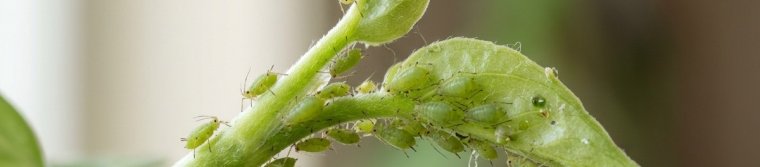
Instead, you find a small crowd of soft, round insects packed along the tender stem.
Some are green, a few are darker, and none of them seem in a hurry to move.
These are almost certainly aphids.
They are among the most common insects on plants of every kind, and houseplants are no exception.
The reassuring part is that aphids are soft and fairly easy to remove when you catch them early.
This guide follows the University of California Statewide Integrated Pest Management Program and its Pest Notes on aphids.
We turn that research into a quiet routine that fits inside normal plant care.
What Aphids Look Like
Aphids are small, soft-bodied insects with a pear-shaped body.
They have long legs and long antennae.
Depending on the species and the plant, they can be green, yellow, brown, red, or black.
A few kinds look waxy or woolly because they cover themselves in a white or gray coating.
The UC program points to one feature that sets them apart from every other insect.
Most aphids have two small tubes, called cornicles, that stick out backward from the rear of the body.
A magnifying glass makes those tubes easy to see.
Most adults have no wings.
Winged forms appear when a colony gets crowded, which lets aphids move on to fresh plants.
Unlike many other small insects, aphids usually do not run away quickly when you touch the leaf.
Why a Few Aphids Become Many
Aphids can multiply at a remarkable pace.
According to the UC program, many adult females give birth to live young without mating.
They can produce as many as 12 young in a single day.
In warm weather, a newborn aphid can grow into a reproducing adult in seven to eight days.
Each adult can produce up to 80 offspring in about a week.
Indoors, the temperature stays mild all year, and the natural enemies found outdoors are missing.
That is why a handful of aphids on a windowsill plant deserves attention the same week you see it.
Signs to Look For
Aphids prefer soft, new growth, so start your search at the tips of the plant.
- Clusters of small insects on new shoots, flower buds, or young leaves.
- Groups gathered on the underside of leaves.
- New leaves that curl, pucker, or look twisted.
- Sticky, shiny spots on leaves or on the table under the pot.
- Black, dusty sooty mold growing on that sticky film.
- Leaves that turn yellow on a heavily infested plant.
- Ants walking up and down the stems.
The sticky film is honeydew, a sugary liquid that aphids excrete as they feed.
Ants feed on honeydew, and the UC program notes that they protect aphids from their natural enemies.
Step 1: Check the Plant and Its Neighbors
Before you treat anything, take a careful look.
Turn the leaves over, since many aphids gather on the undersides.
Look closely at the growing tips and any flower buds.
Then check the plants that were nearby, especially those of the same kind.
The UC program suggests checking at least twice a week while plants are growing quickly.
On houseplants, a slow look during each watering covers most of that.
If the infested plant was touching others, move it to a separate spot for now.
Step 2: Rinse Them Off With Water
Water is often all you need.
The UC program recommends knocking aphids off sturdy plants with a strong stream of water.
It notes that most dislodged aphids cannot climb back onto the plant.
Indoors, the sink or shower works well.
- Use lukewarm water and a firm but gentle spray.
- Tilt the plant so the water reaches the undersides of the leaves.
- Hold a hand over the soil if it begins to wash out of the pot.
- Let the pot drain completely before you return it to its place.
A rinse also washes off the sticky honeydew.
For delicate plants, use a softer spray or wipe the aphids away with a damp cotton swab.
Repeat every few days while you still find aphids.
Step 3: Prune Badly Infested Tips
When aphids are packed onto a few shoots or curled leaves, pruning is often the quickest fix.
The UC program recommends pruning out localized infestations and disposing of them.
Curled leaves matter most here.
Aphids hidden inside a curled leaf are sheltered from sprays that only work on contact.
Snip those leaves off with clean scissors.
Drop the cuttings straight into a sealed bag in the trash, and wipe the blades before you move to another plant.
Step 4: Use Soap or Oil Only When Needed
If rinsing and pruning are not enough, the UC program names insecticidal soaps and oils as the best choices for most situations.
Oils include horticultural oil and plant-based oils such as neem or canola oil.
These products work mainly by smothering the aphids, so they must touch them directly.
- Cover the infested parts thoroughly, including the undersides of the leaves.
- Test the product on a small part of the plant several days before a full treatment.
- Do not use soaps or oils on a plant that is short of water.
- Do not use them when the temperature is above 90 degrees Fahrenheit.
- Follow the label exactly.
These products kill only the aphids that are present on the day you spray.
Plan to repeat the treatment if new aphids appear.
The UC program advises against broad-spectrum insecticides, which harm beneficial insects and can create other problems.
Step 5: Feed Gently
This step is easy to miss, and it matters.
Aphids feed on soft, new growth, and lots of nitrogen fertilizer produces exactly that kind of growth.
The UC program says high levels of nitrogen favor aphid reproduction.
It recommends never using more nitrogen than necessary.
It also suggests slow-release products applied in small amounts rather than all at once.
For a houseplant, that usually means feeding lightly and only while it is actively growing.
Step 6: Keep Watching for a Few Weeks
Because aphids reproduce so quickly, one missed group can restart the problem.
Check the plant every few days for the next several weeks.
Look at the tips, the buds, and the undersides of the leaves each time.
Once several checks come up clean, the plant can go back to its usual spot.
Leaves that were already curled will not flatten again, but the new growth should look normal.
Keep Ants Away
If you see ants on your plants, they are probably there for the honeydew.
The UC program describes ant management as a key part of aphid management.
Indoors, wipe up honeydew from leaves, pots, and windowsills so there is nothing to collect.
Keep the area clean of crumbs and spills that draw ants inside in the first place.
How to Prevent Aphids
- Inspect new plants closely before you bring them home, especially the growing tips.
- Keep new plants apart from your collection for two or three weeks.
- Feed lightly, and choose a slow-release fertilizer.
- Look at new shoots and buds every time you water.
- Rinse dusty or sticky leaves when you notice them.
Good watering habits keep plants strong enough to shrug off a few pests.
For most houseplants, the University of Maryland Extension recommends watering when the soil is dry about two inches down.
Our guide on how to water indoor plants explains that routine step by step.
Aphid or Something Else?
Several pests leave sticky honeydew behind, so it helps to look closely.
Small, hard bumps that never move are more likely scale insects, covered in our scale insect guide.
White, cottony tufts tucked into leaf joints point to mealybugs, which our mealybug guide explains.
Fine webbing with pale speckles on the leaves suggests spider mites instead.
If you replace a plant and share your home with pets, check it in the ASPCA list of toxic and non-toxic plants.
Keeping It in Perspective
The UC program notes that most established plants tolerate aphid feeding and outgrow the damage.
So there is no need to panic when you find a cluster on a new shoot.
Rinse, prune what is badly curled, feed gently, and look again in a few days.
That small, steady habit is usually all it takes to keep aphids in check.
Sources and Further Reading
- UC Statewide Integrated Pest Management Program — Pest Notes: Aphids: supports the identification and cornicles, the reproduction rates, honeydew and ants, monitoring, water sprays, pruning curled leaves, soaps and oils with the 90 degree limit, and the advice on nitrogen fertilizer.
- University of Maryland Extension — Watering Indoor Plants: supports the two-inch finger test and full drainage after watering.
- UC Statewide Integrated Pest Management Program — Pest Notes Library: research-based guides to look-alike pests such as scales, mealybugs, and whiteflies.
- ASPCA Animal Poison Control — Toxic and Non-Toxic Plants: the reference for checking whether a replacement plant is safe around cats and dogs.