
Few things feel as rewarding as the first ripe tomato of summer.
That is why it stings when something goes wrong.
A fruit turns black on the bottom, or the skin splits after a storm.
Lower leaves turn yellow and spotted, or the flowers simply fall off.
The calm news is that most tomato problems follow a few simple patterns.
Many of them come from uneven water, weather, or crowded plants rather than a mystery disease.
This guide follows the tomato diseases and disorders fact sheet from Clemson Cooperative Extension.
We focus on the problems home gardeners see most often and the gentle habits that prevent them.
Start With Healthy Habits
Clemson Extension notes that tomatoes grow on almost any moderately well-drained soil.
A good supply of organic matter can raise yields and reduce problems.
Three habits prevent a surprising number of troubles:
- Rotate where you plant tomatoes and their relatives.
- Keep soil moisture steady with watering and mulch.
- Give plants enough space and support for air to move.
Clemson Extension advises not planting tomatoes, peppers, eggplants, or potatoes in the same spot more than once in three years.
These plants share many of the same diseases.
Moving them around the garden keeps those diseases from building up in the soil.
Blossom End Rot
What it looks like
Blossom end rot starts as a water-soaked spot on the bottom of the fruit.
That is the end opposite the stem, where the flower used to be.
The spot grows larger and turns black and leathery.
Why it happens
Clemson Extension explains that it is a disorder, not an infection.
The developing fruit does not get enough calcium.
Often the soil has calcium, but uneven moisture keeps the plant from moving it into the fruit.
Big swings between dry and wet soil are a common trigger.
Cool, cloudy, humid weather and root damage from digging nearby can add to it.
Too much ammonium nitrogen, potassium, or magnesium fertilizer can also compete with calcium.
Calm fixes
- Water deeply and regularly so the soil never swings from bone dry to soaked.
- Spread mulch to keep moisture even.
- Test your soil before planting and lime only as the report recommends.
- Avoid digging close to the plants once they are growing.
- Pick off affected fruit so the plant puts its energy into new ones.
Clemson Extension suggests liming to bring soil pH to about 6.5, based on a soil test.
It also warns against adding Epsom salt unless a soil test shows a magnesium shortage.
Our guide to taking a garden soil sample explains how to get that report.
Growth Cracks
Cracks are splits in the skin, often in rings around the stem or lines down the sides.
Clemson Extension explains that they appear when dry weather is followed by heavy rain or watering.
The fruit suddenly grows faster than its skin can stretch.
Deep cracks can let rot organisms into the fruit.
The prevention is the same steady routine that stops blossom end rot.
Keep soil moisture even and keep a layer of mulch in place.
Harvesting fruit as it ripens, before a big storm, also helps.
Some varieties are labeled crack-tolerant, which is useful if this happens every year.
Sunscald
Sunscald shows up as pale, papery, or whitish patches on the side of the fruit facing the sun.
Clemson Extension notes it is most common on green fruit during hot weather.
It usually happens when the plant loses leaves that would normally shade the fruit.
Leaf diseases are a frequent cause of that leaf loss.
Keeping the foliage healthy is the best protection.
In a heat wave, light shade cloth over exposed fruit can also help.
Flowers That Drop Without Setting Fruit
Healthy plants with plenty of flowers but no tomatoes can be confusing.
Clemson Extension lists several common reasons:
- Temperature. Blossoms often drop when it stays below 55 or above 90 degrees Fahrenheit for long stretches.
- Dry soil. Flowers dry and fall when plants do not get enough water.
- Shade. Plants with less than six hours of sun produce few blossoms.
- Too much nitrogen. Heavy nitrogen pushes leaves at the expense of flowers and fruit.
Temperature drops are temporary.
When the weather settles, new flowers usually set fruit again.
If heat is a regular problem where you live, look for heat-tolerant varieties.
Early Blight
Early blight is a fungal disease that usually starts on the older, lower leaves.
It begins as small brown spots.
The spots grow and often show rings, like a small target or bull's-eye.
The leaf tissue around them may turn yellow.
The fungus survives on old plant debris in the soil.
Clemson Extension recommends several steady habits:
- Choose resistant or tolerant varieties when you can.
- Rotate crops and remove volunteer tomato plants and nightshade weeds.
- Space plants so they do not touch.
- Mulch to keep soil from splashing onto leaves.
- Water at the soil, not over the leaves.
- Trim off and dispose of infected lower leaves.
Septoria Leaf Spot
Septoria leaf spot is another common fungal disease.
It also starts on lower leaves, usually after the plants begin to set fruit.
The spots are small and round, with dark edges and a pale tan center.
Tiny black specks often sit in the middle of each spot.
Badly spotted leaves turn yellow and fall.
The fruit itself is not infected, but losing leaves can expose it to sunscald.
Clemson Extension notes the fungus is most active in mild, humid weather when leaves stay wet.
A three-year rotation and removing old plant debris reduce it.
Avoiding overhead watering is one of the most helpful steps.
Water at the Base, Not Over the Leaves
So many tomato diseases spread through wet leaves and splashing water.
The way you water makes a real difference.
Aim the water at the soil around the base of each plant.
A soaker hose or drip line does this gently and evenly.
If you water by hand, hold the hose low and water early in the day.
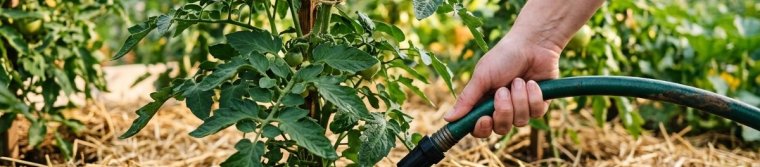
Then the soil surface and any splashed leaves dry before evening.
Clemson Extension suggests a garden site with morning sun, which also helps leaves dry quickly.
A layer of mulch keeps soil from bouncing up onto the lower leaves.
Our guide to mulching garden beds covers how deep to spread it.
Give Plants Room and Support
Crowded tomatoes stay damp and shaded inside.
That creates the humid conditions leaf diseases enjoy.
Clemson Extension suggests spacing plants about three feet apart in many gardens.
Staking or caging lifts leaves and fruit off the ground and lets air move through.
Keep weeds down around the plants, since weeds also hold humidity.
If space is tight, a few well-spaced plants often produce more than many crowded ones.
When to Ask for Help
Some problems look alike, especially wilts and rots.
A plant that wilts suddenly while its leaves stay green needs a closer look.
Clemson Extension suggests sending a sample through your local Extension office for diagnosis.
The diagnosis helps you choose the right fix instead of guessing.
If you consider any fungicide, read and follow the label exactly.
Spray late in the day to protect bees and other pollinators.
A Simple Tomato Care Checklist
- Rotate tomatoes and their relatives every year.
- Test the soil and lime only as recommended.
- Water deeply and evenly, aimed at the base.
- Keep a layer of mulch around the plants.
- Space, stake, or cage plants for airflow.
- Remove spotted lower leaves and old plant debris.
- Harvest ripe fruit before heavy rain when you can.
A Calm Way to See It
A spotted leaf or a split tomato is not a failed garden.
It is information about water, weather, and airflow.
Small steady changes usually fix most of these problems by next season.
If you garden in pots, our guide to growing vegetables in containers has watering tips that help tomatoes too.
And if white powder shows up on squash nearby, see our calm guide to powdery mildew.
Sources and Further Reading
- Clemson Cooperative Extension, Home and Garden Information Center — Tomato Diseases and Disorders: supports crop rotation, blossom end rot causes and prevention, growth cracks, sunscald, poor fruit set, early blight, Septoria leaf spot, watering at the base, spacing, and sending samples for diagnosis.
- Clemson Cooperative Extension — Soil Testing: why to test soil before adding lime or fertilizer.
- UC Statewide Integrated Pest Management Program — Mulches: how mulch holds soil moisture and protects plants.